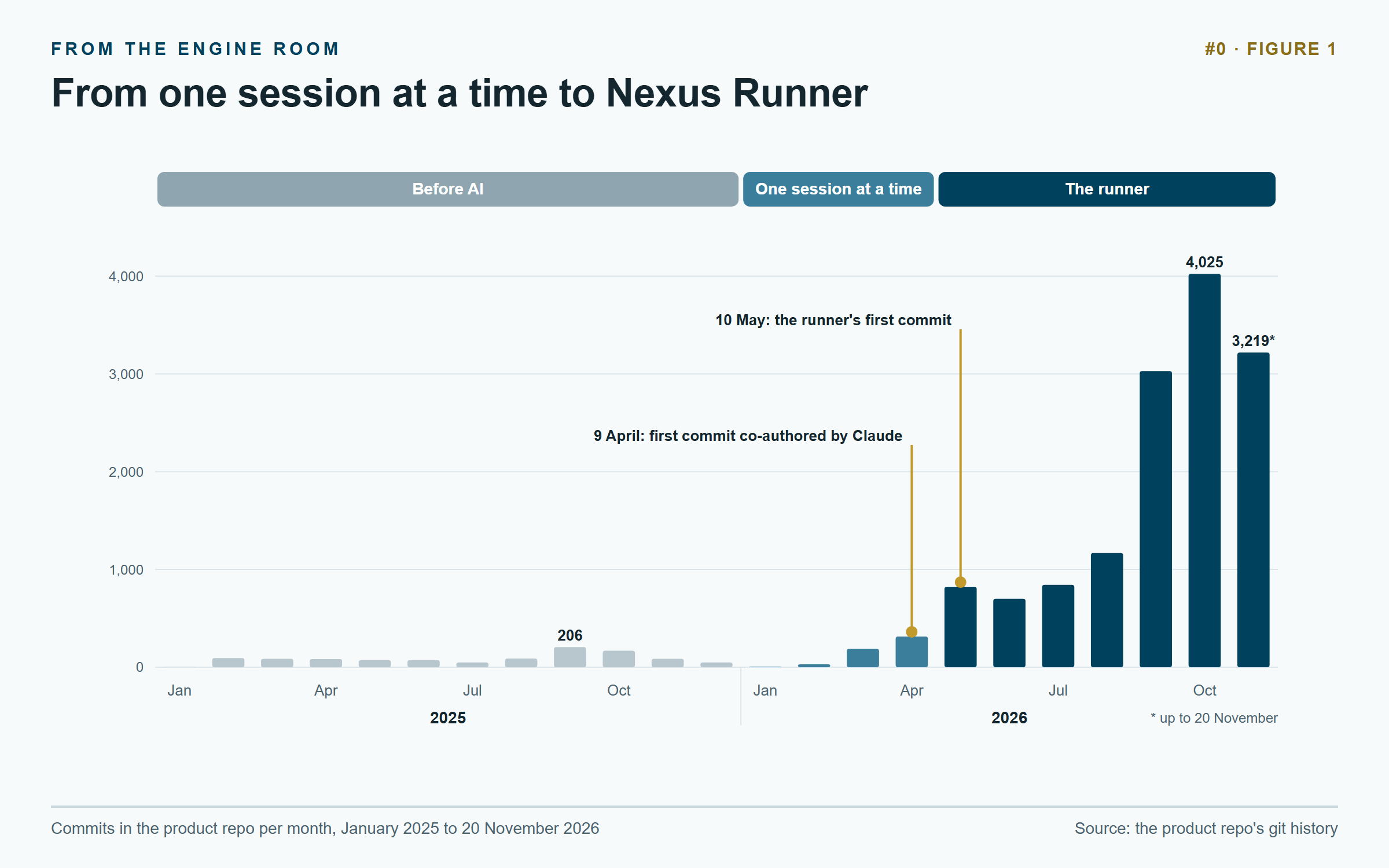
From the engine room #0: AI writes the code. It doesn't run the process.
Why I built Nexus Runner, why software engineering experience still matters, and what this means for the next generation of developers.
Read the postAI in practice
Thomas Petersen on getting AI to deliver work you can trust: gates, locked tests, small sessions and what 3,000+ AI-delivered tasks have taught us.
Why I built Nexus Runner, why software engineering experience still matters, and what this means for the next generation of developers.
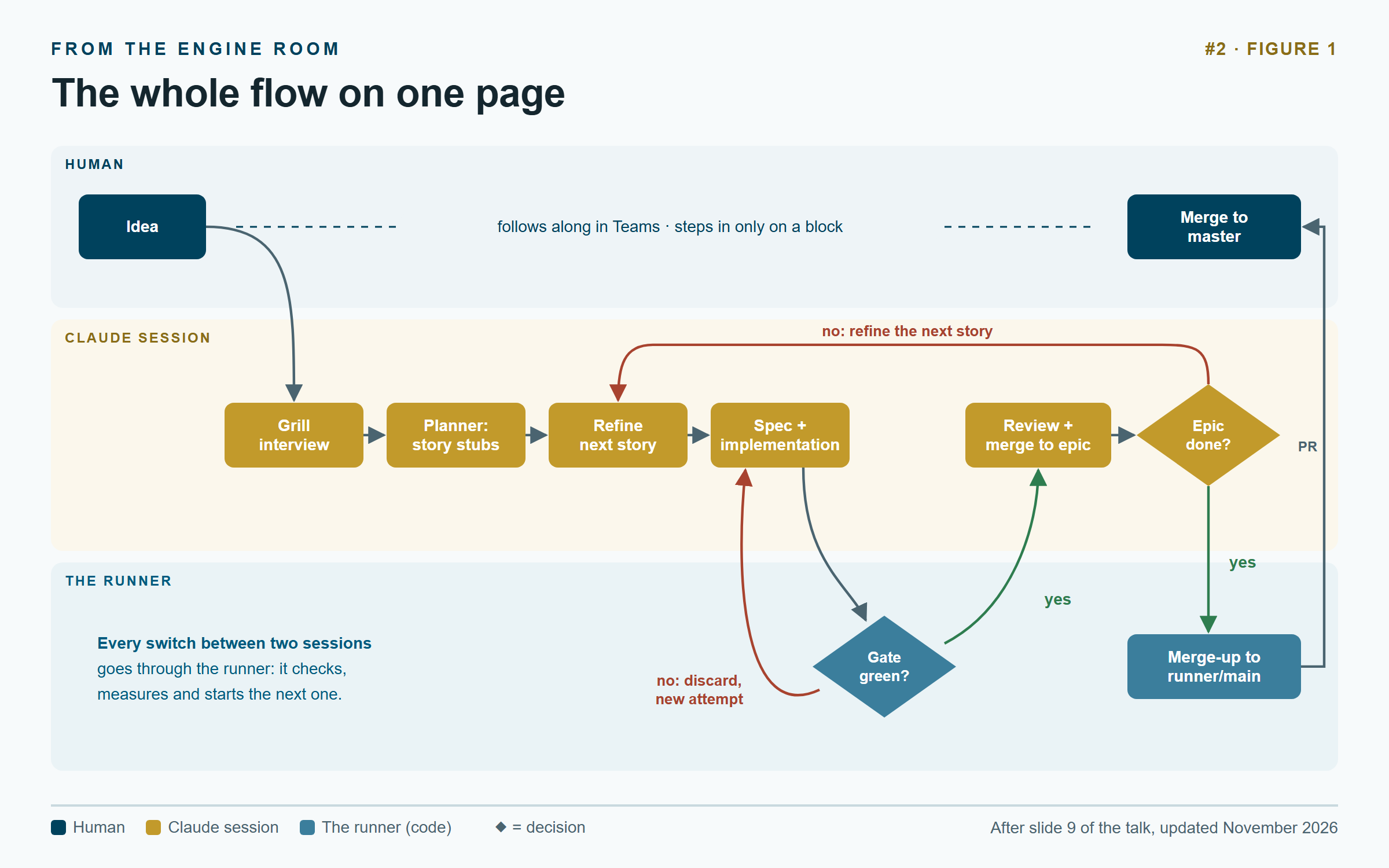
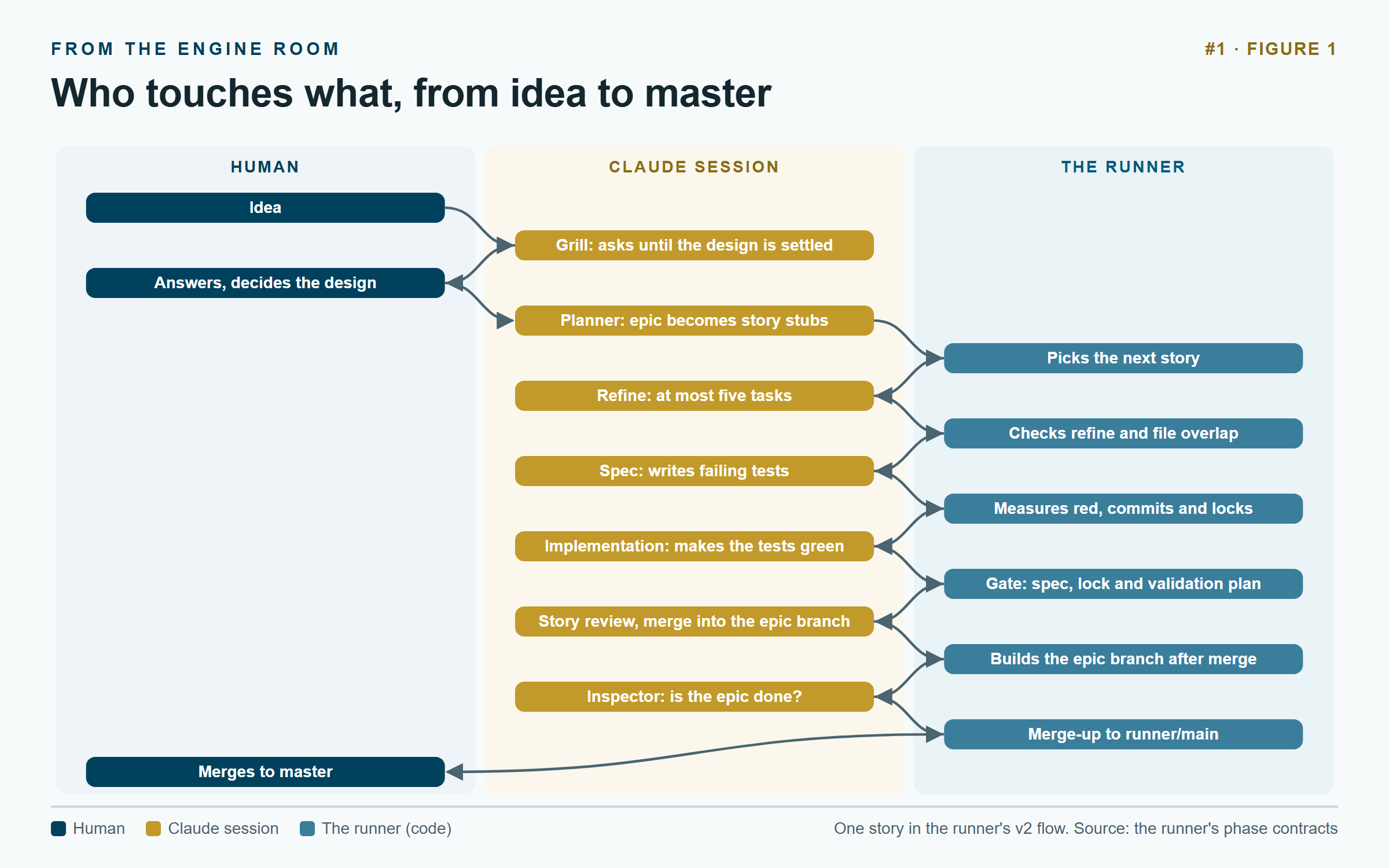
Read the postWhy AI sessions write the code but never run the process: the three roles, the gates and the numbers behind ten parts about our runner.
The grilling interview, the design document as a contract and epics with a Definition of Done: the one step where the human really works.
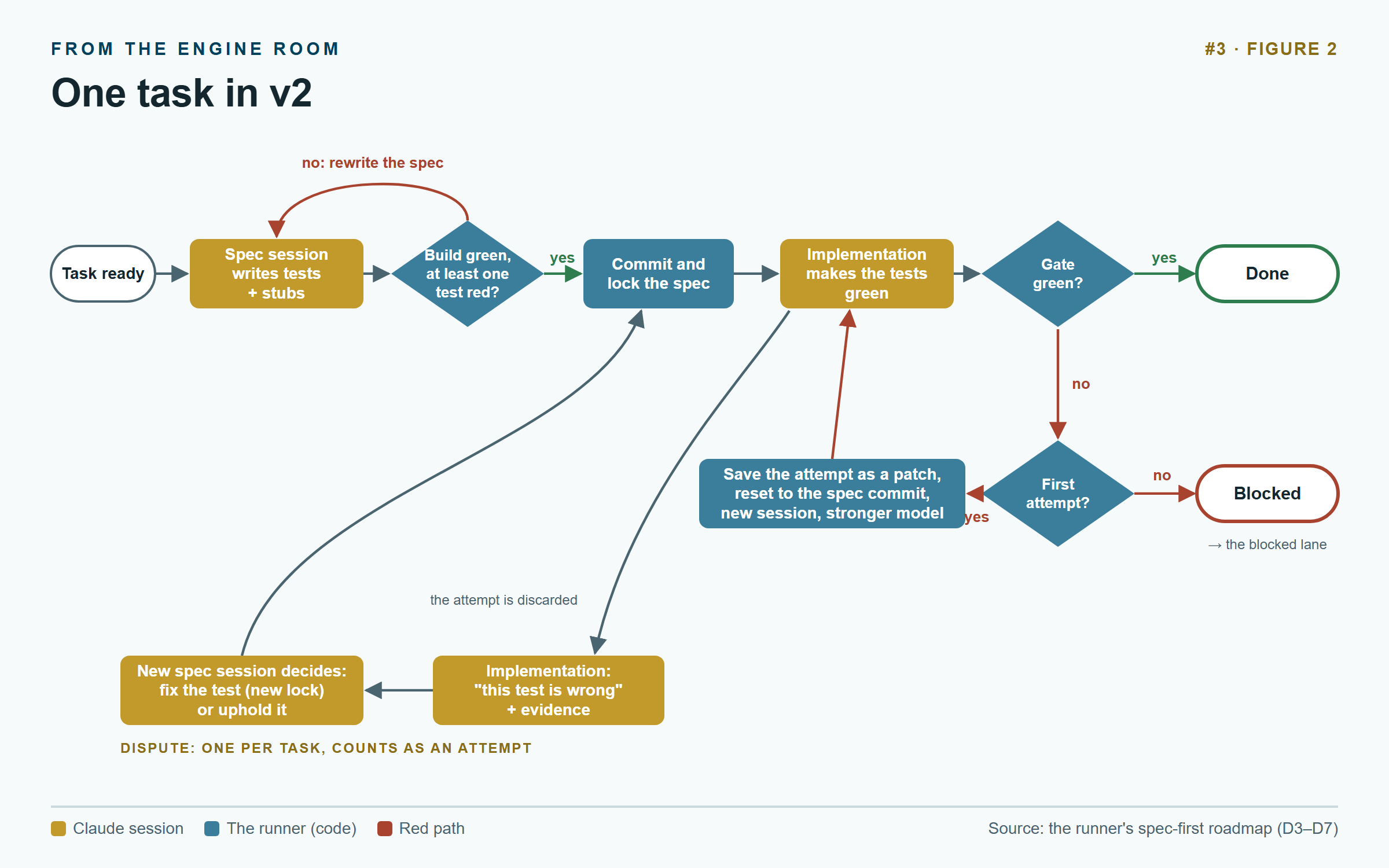
A red test written by one session, locked by code and made green by another. That is how the one running can't move the finish line.
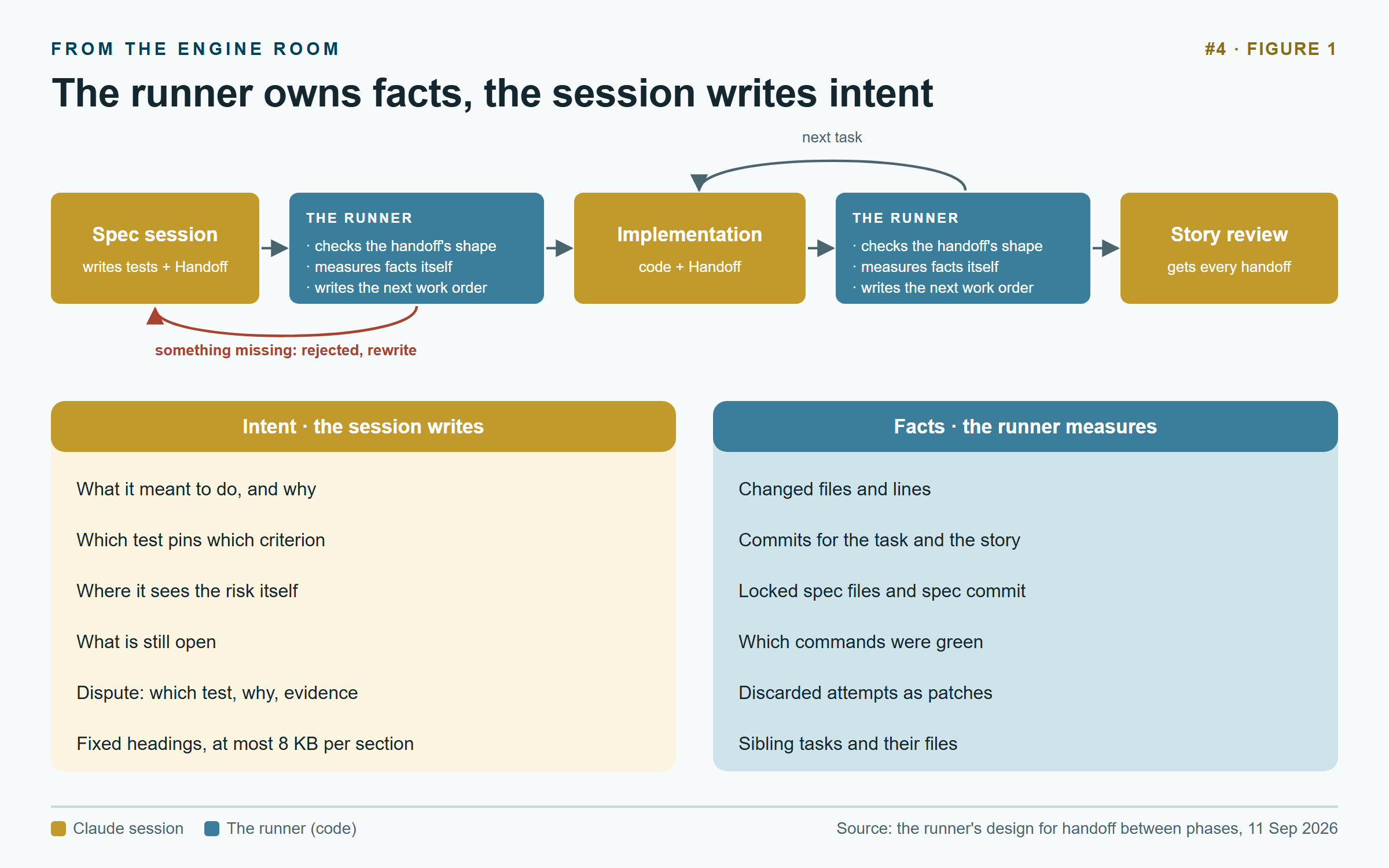
Sessions without memory that never talk to each other. What moves on goes through the runner, and only if it is in the right place.
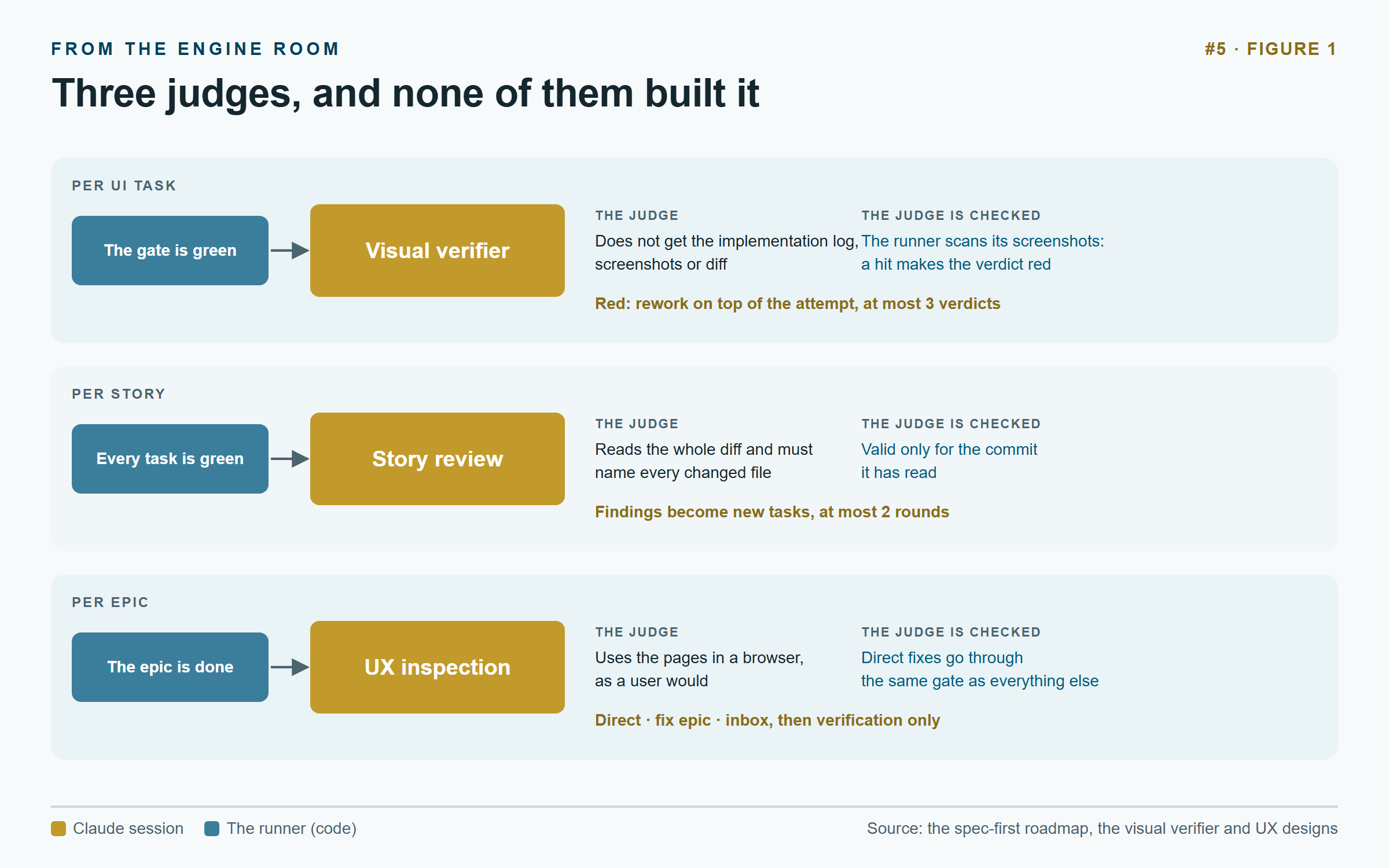
Story review, visual verifier and UX inspection: three judges who never built what they judge, and code that checks the judges.
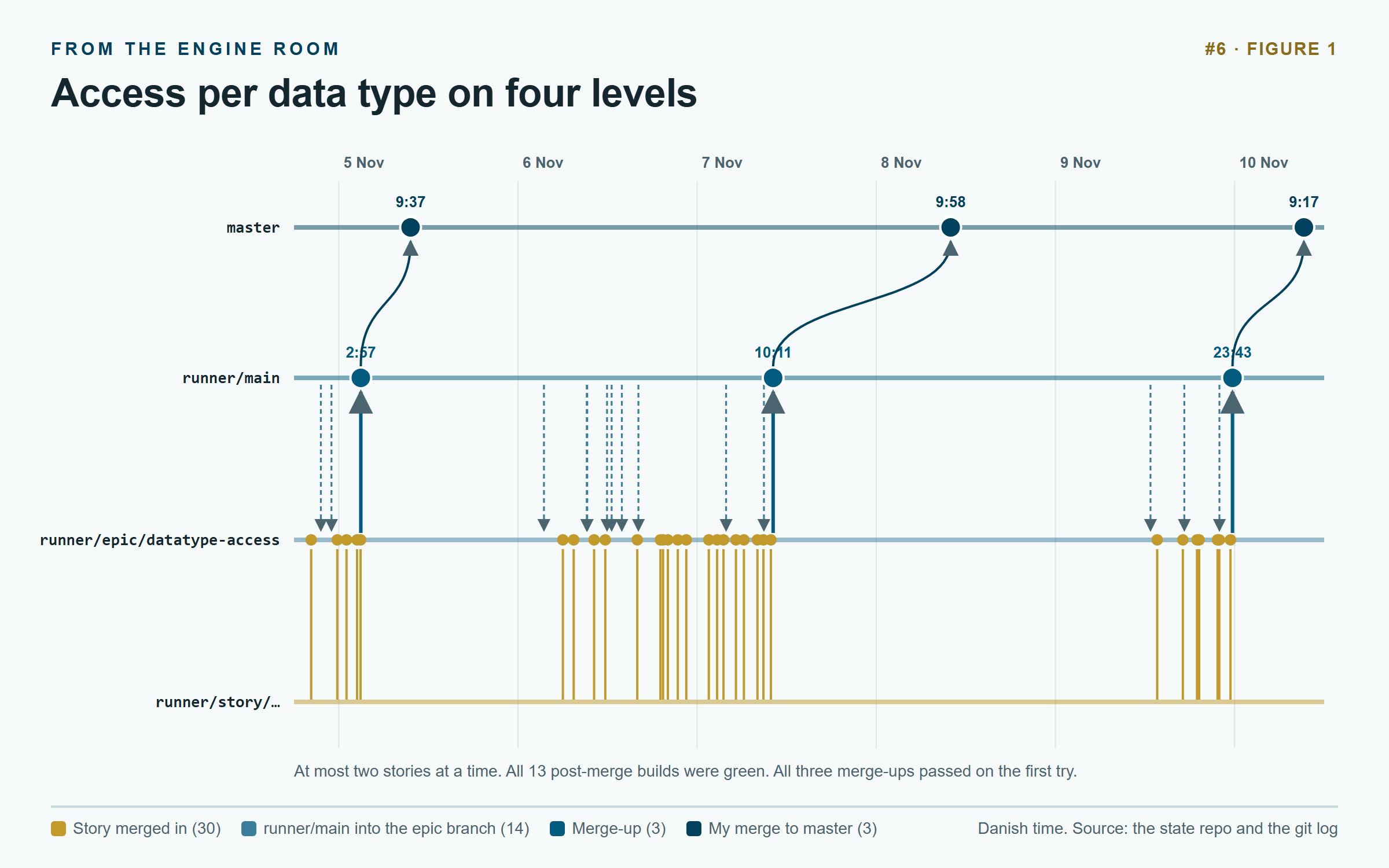
Up to eight sessions in one repo: four levels of branches, the merge chain up to master and a backlog that lives in its own git repo.
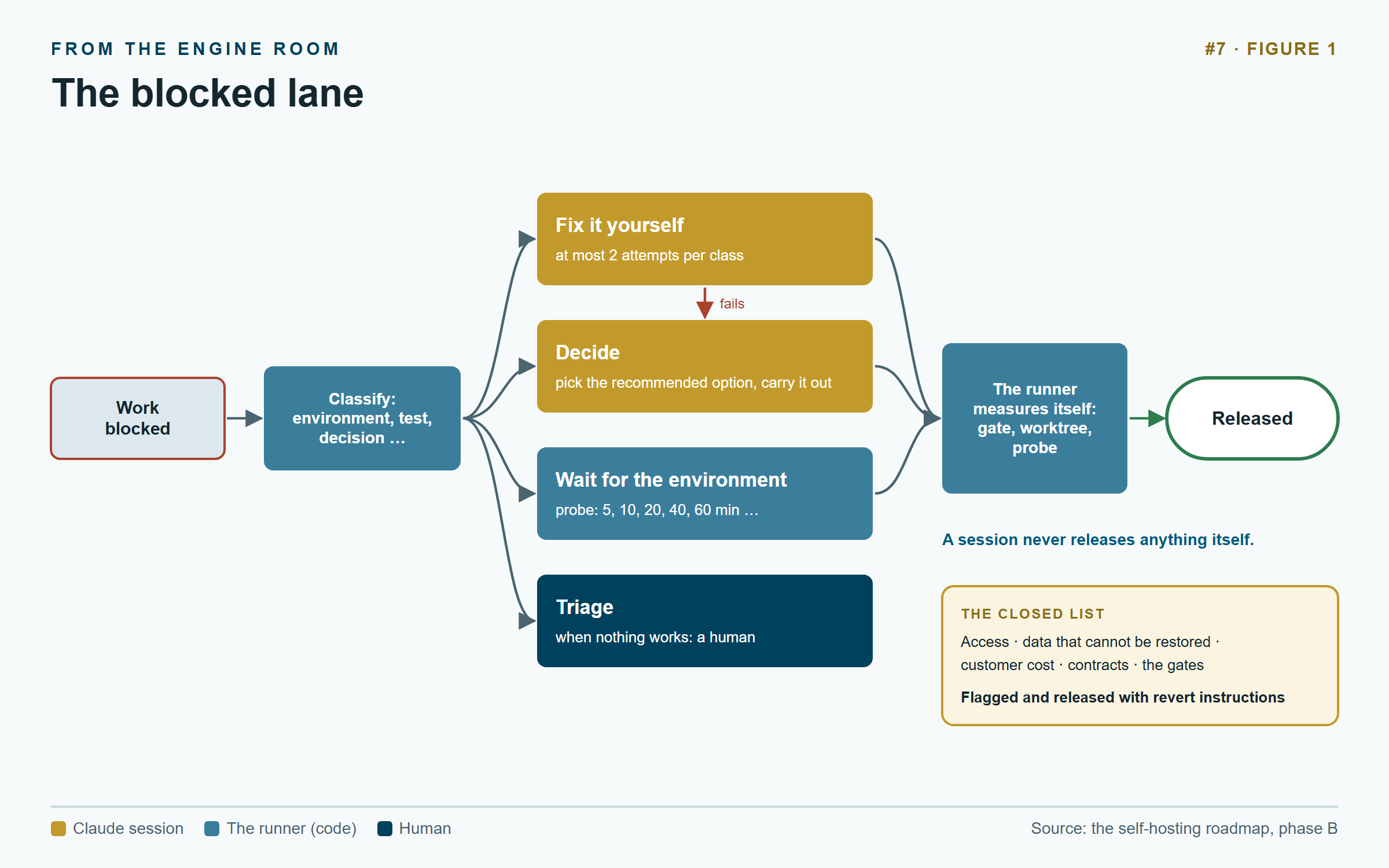
Blocked work and a runner that goes down at 3 a.m.: the two levels of failure, and a mechanism that worked but was deleted anyway.
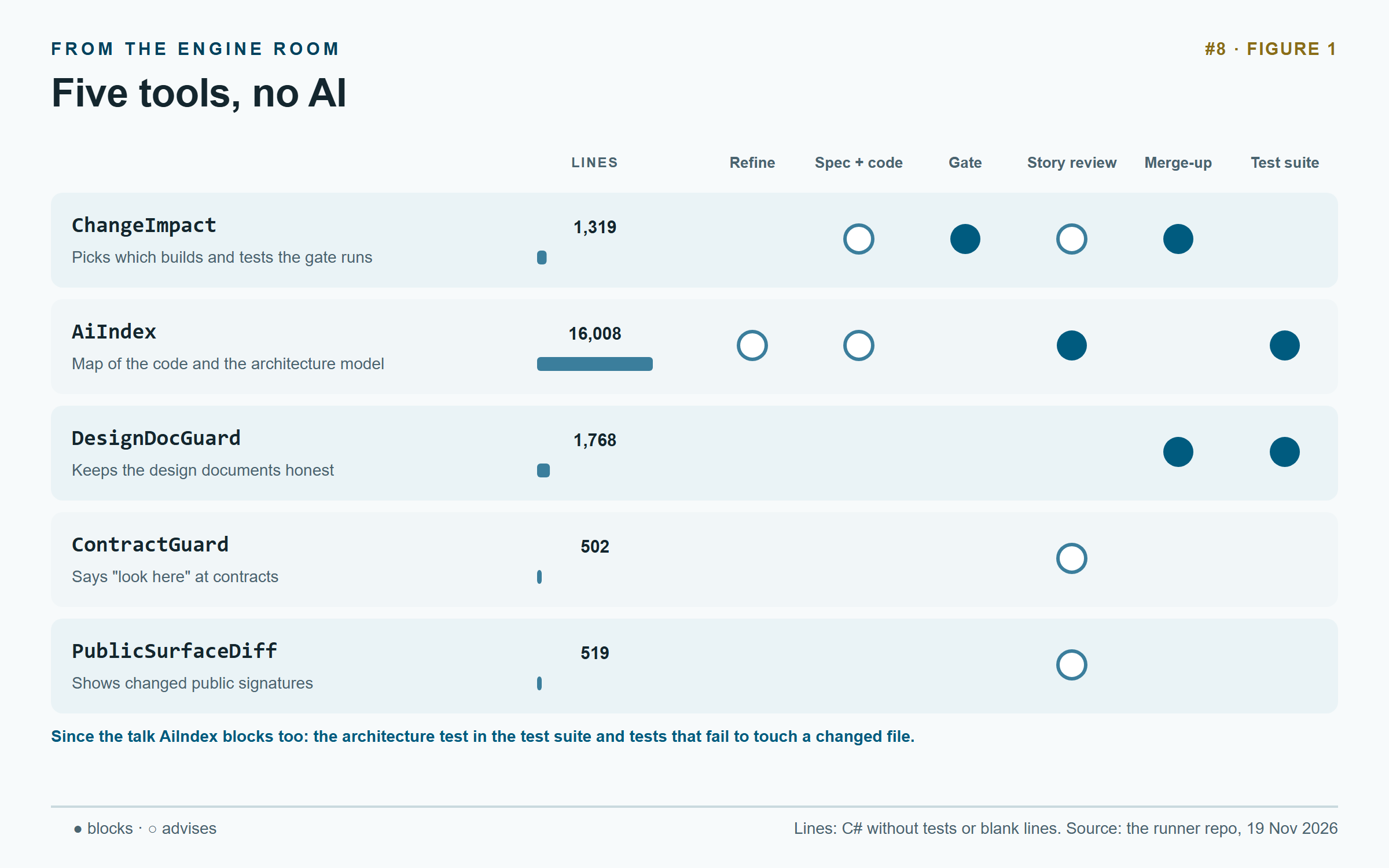
Behind the gates sit five small .NET tools without AI. The same input gives the same answer, and that is the whole point.
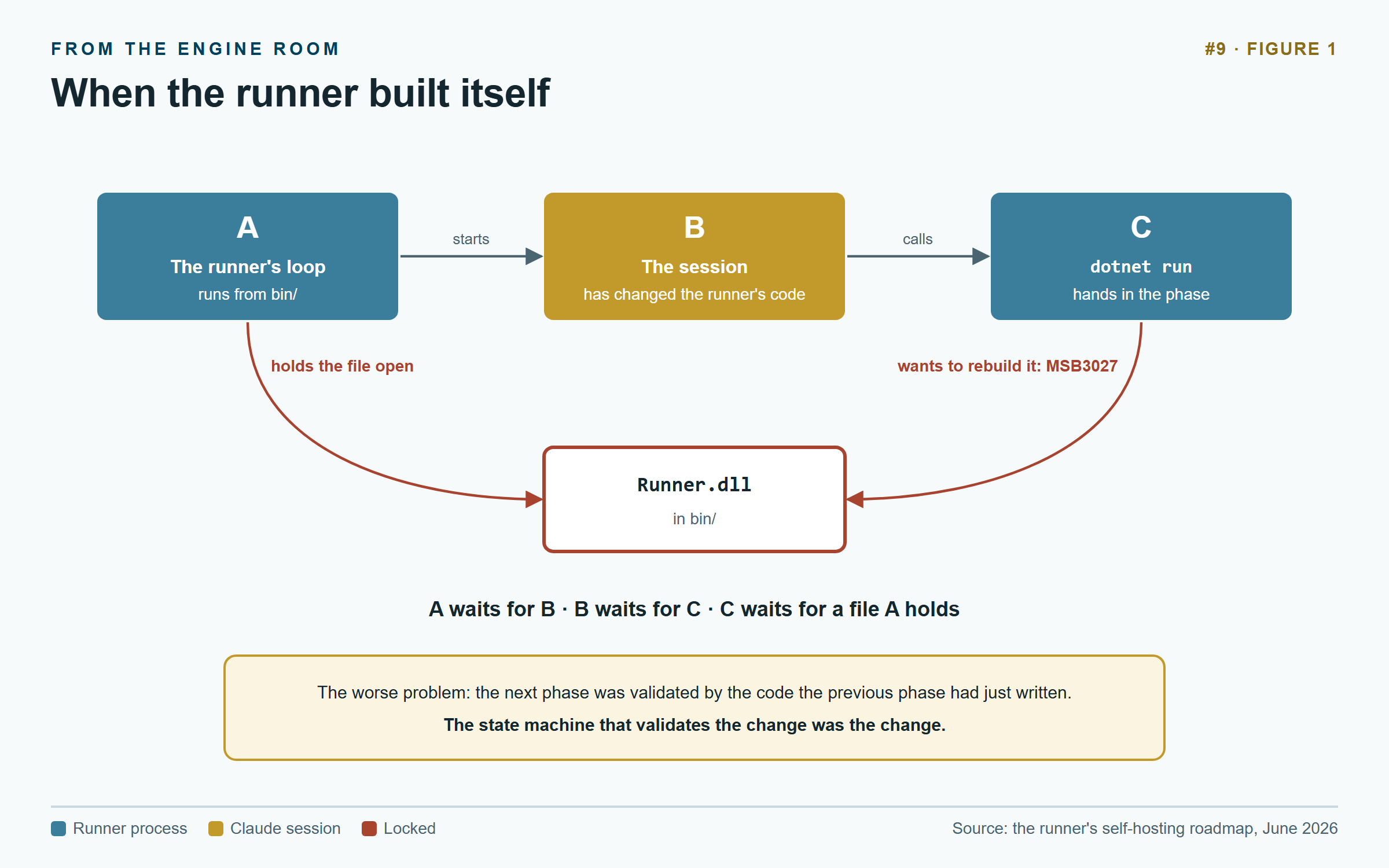
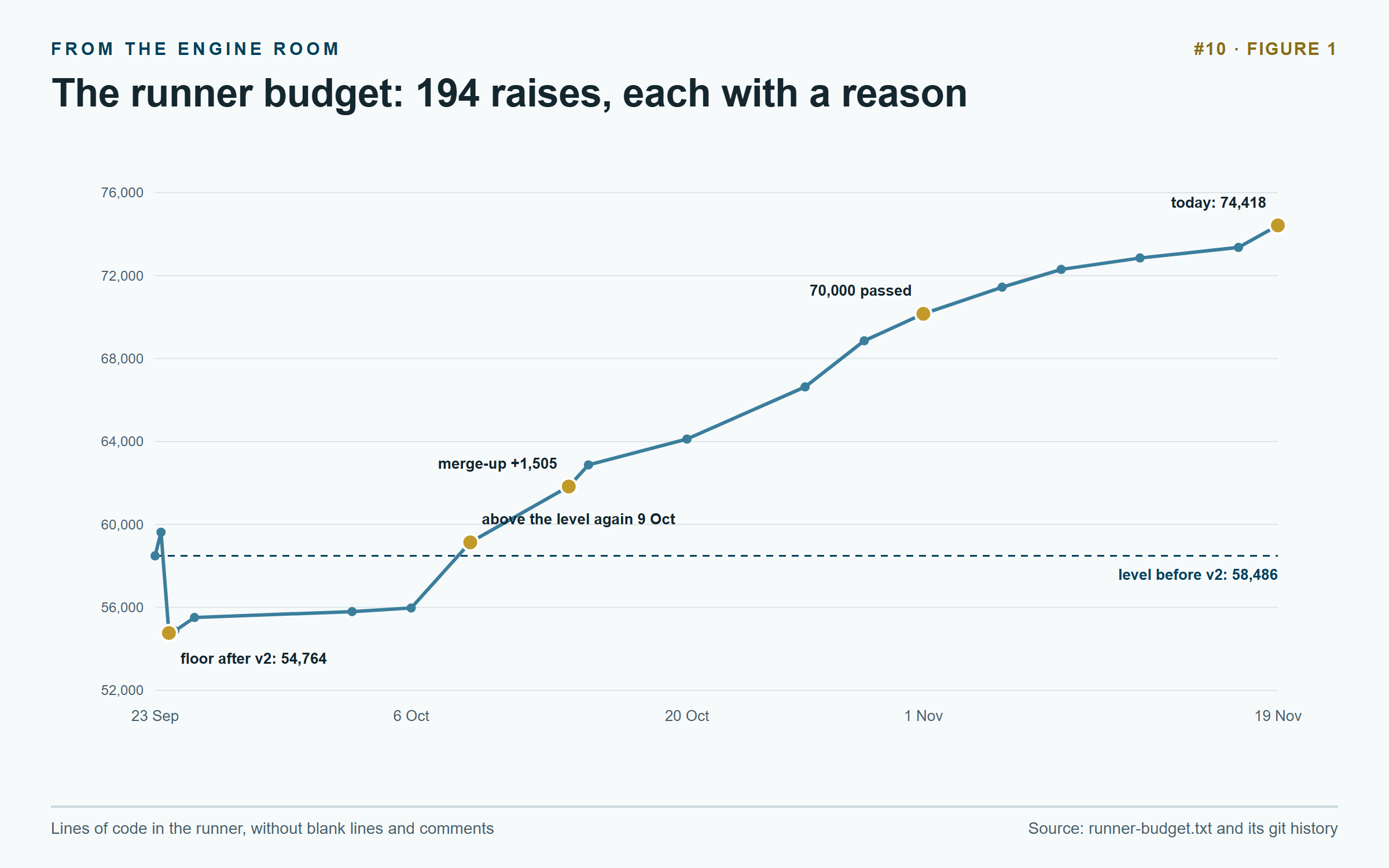
We let the runner change itself. It went wrong in the most instructive way and ended with the rule that the runner never changes itself.
When a fault is reported fixed, a gate, a test, a sweep or a hook must enforce it. That is the rule the other nine parts build on.